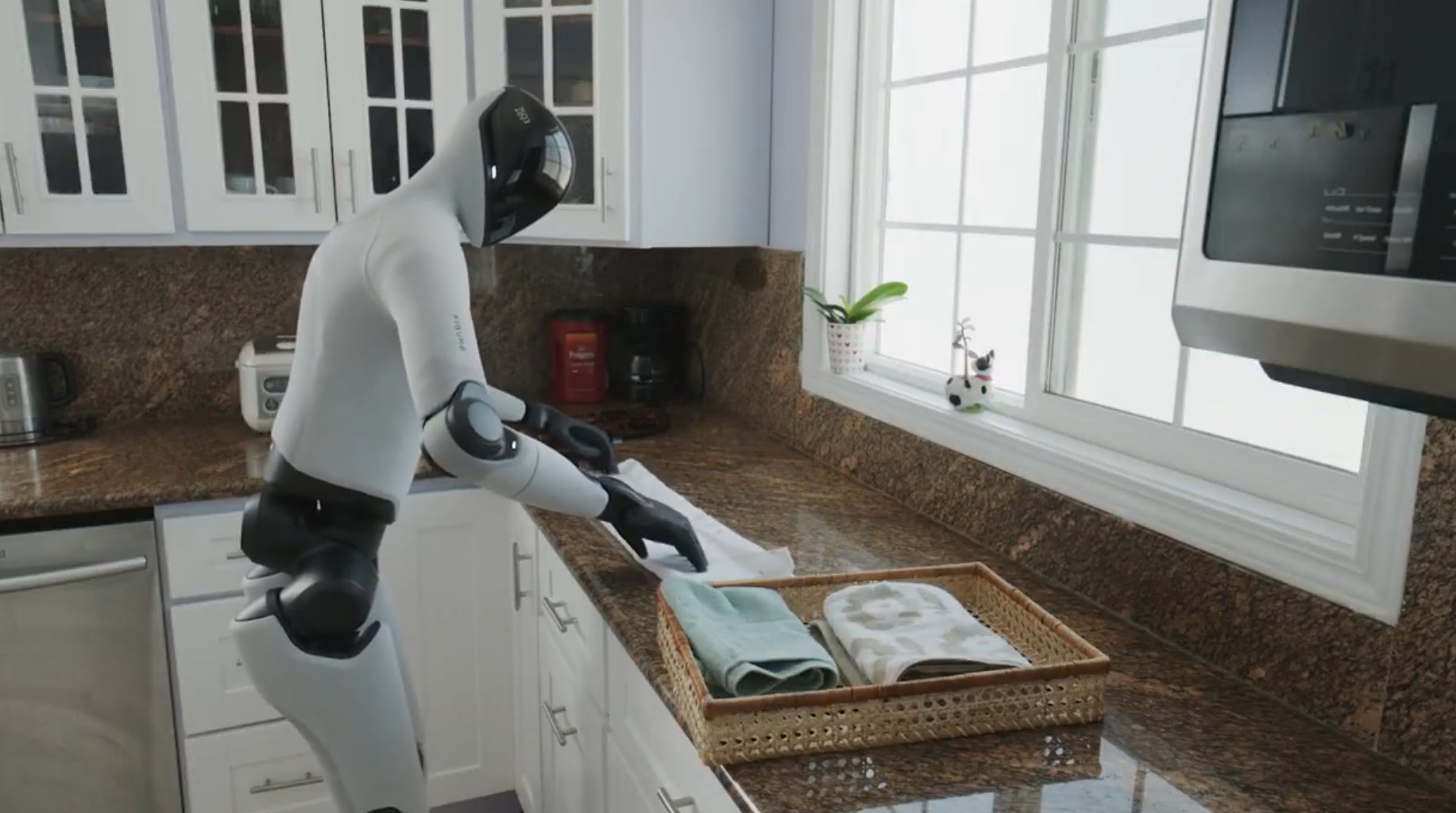
On September 17, 2026, Figure unveiled Helix 2.5, a new AI control model for its humanoid robots that achieved a 56% success rate across three household tasks performed in 30 previously unseen Bay Area homes.
A 56% success rate is genuinely remarkable for zero-shot generalization across real, messy, varied household environments. It also means the robot fails almost half the time, which is still a long way from the reliability standard that everyday home use would require.
The comparison here isn't robot versus human housekeeper. It's a robot trained on general human behavior data versus the same hardware with no meaningful pretraining. Going from roughly one-in-eleven to better-than-one-in-two, without ever seeing the environment beforehand, is a significant engineering result.
The model was tested on three full-body chores: making beds, folding towels, and tidying living rooms. Each task requires the robot to reason about objects it has never encountered before, arranged in spatial configurations it has never seen.
Its predecessor, Helix 0.2, already coordinates full-body control across longer tasks, like unloading a dishwasher or running an autonomous logistics operation for 200 straight hours — but it relied on data collected in the very same environments where the robot would later operate.
Less Data, Better Self-Correction: The Efficiency Behind Helix 2.5
Figure also compared Helix 2.5 against an earlier Helix 0.2 policy trained for the same task, but using data collected directly in the environment where it was later evaluated. According to the company, Helix 2.5 matched that same success rate using half the adaptation data — and did it zero-shot, across 30 homes it had never seen before.
How the Zero-Shot Evaluation in Real Homes Was Designed
Figure defined "zero-shot" in reference to both the evaluation environments and the objects being manipulated. Each behavior was specified using fine-tuning data collected in a location different from where the actual test took place.
None of the toys, towels or bedding used in the evaluation had ever appeared in the task-specification data beforehand, and the robot worked directly on the couches, beds and folding surfaces that already existed in each home — no staged setup, no props brought in ahead of time.