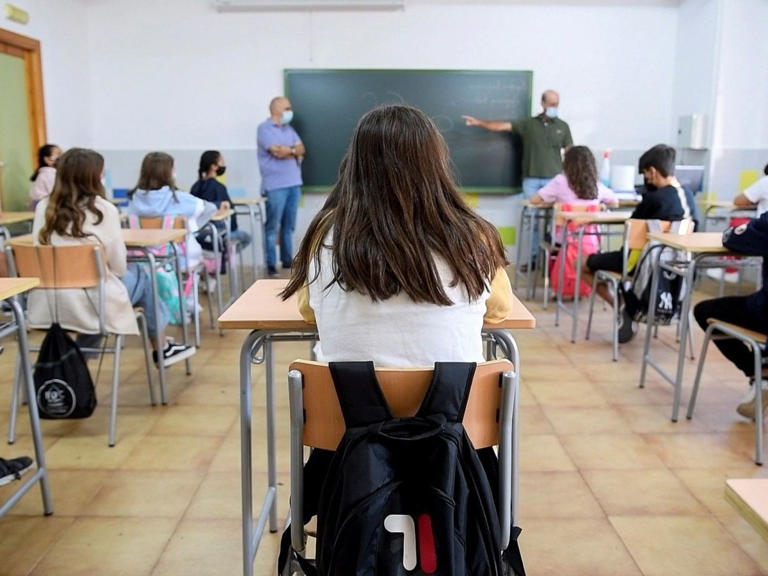
Families' interest in their children's education appears to be fading in many high-income countries. Compared with the 2022 results, nearly every country saw a decline in family support for children's schooling — a drop that was especially pronounced when it came to boys.
What Is the PISA Report?
The Program for International Student Assessment (PISA) tests reading, math and science skills every three years. The exam has drawn criticism from many teachers and education experts, who argue it oversimplifies what actually happens in a classroom.
More than 760,000 teenagers across dozens of countries took the test last year. The results, published this week, show that average scores in math, reading and science have hit their lowest point in PISA's history among highly developed economies — in short, things aren't looking great.
China, Singapore, Taiwan, Japan and South Korea posted the best results on the test, while Estonia, the United Kingdom and New Zealand also performed well.
Digital distraction is another factor at play. More than a quarter of students in high-income countries said their classmates get distracted by digital devices during most or all of their science classes.
Does AI Use Help Explain the PISA Results?
Data on how students use AI chatbots for schoolwork shows that roughly one in four uses AI frequently, according to Andreas Schleicher, the OECD's director of education. Based on what test-takers described, the main uses were summarizing a text they were supposed to read instead of actually reading it, doing preliminary research on a new topic, drafting written assignments, and generally getting help learning.
By the Numbers
| AI Use | Task | Avg. Science Score |
|---|---|---|
| Rarely or never | Summarizing a text to read | 509 |
| Daily or almost daily | Summarizing a text to read | 476 |
| Rarely or never | Drafting written assignments | 510 |
| Frequently | Drafting written assignments | 478 |