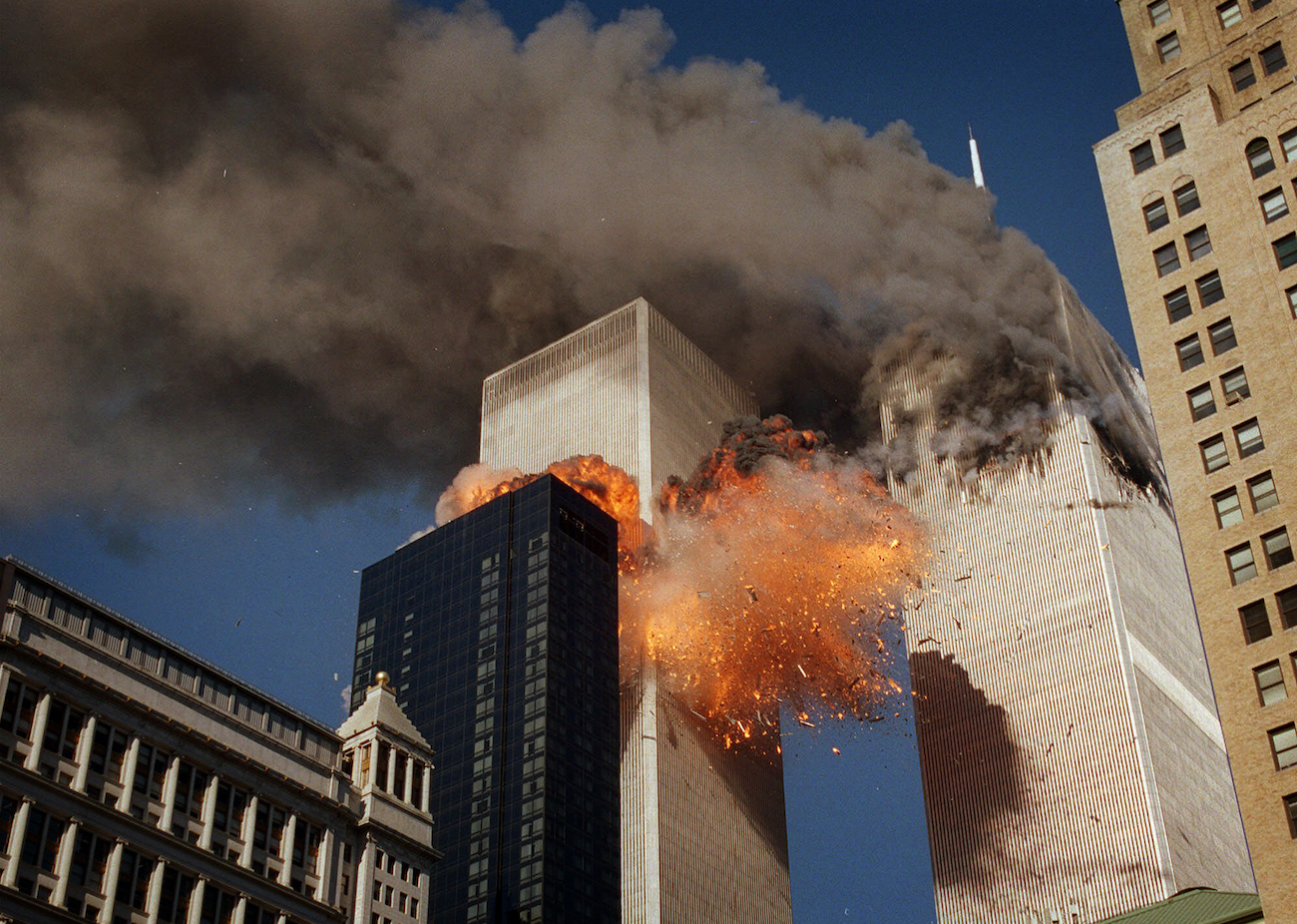
On the morning of September 11, 2001, four commercial flights were hijacked within the span of an hour along the U.S. East Coast. What followed was the deadliest attack ever carried out on American soil, unfolding live on television over the course of roughly 100 minutes — and setting off a chain of events that reshaped U.S. politics, foreign policy and daily life for decades. All times below are Eastern Time (ET), the time zone where the events took place.
Minute by Minute
American Airlines Flight 11 departs Boston's Logan Airport bound for Los Angeles, carrying 92 people on board. It is hijacked by five men shortly after takeoff.
United Airlines Flight 175, also headed from Boston to Los Angeles with 65 people aboard, is hijacked soon after departure.
Flight attendant Betty Ong calls an American Airlines reservations line from the back of Flight 11 and calmly relays what is happening on board — hijackers in first class, a passenger stabbed, the crew locked out of the cockpit — giving ground staff the first real-time account of the unfolding hijacking.
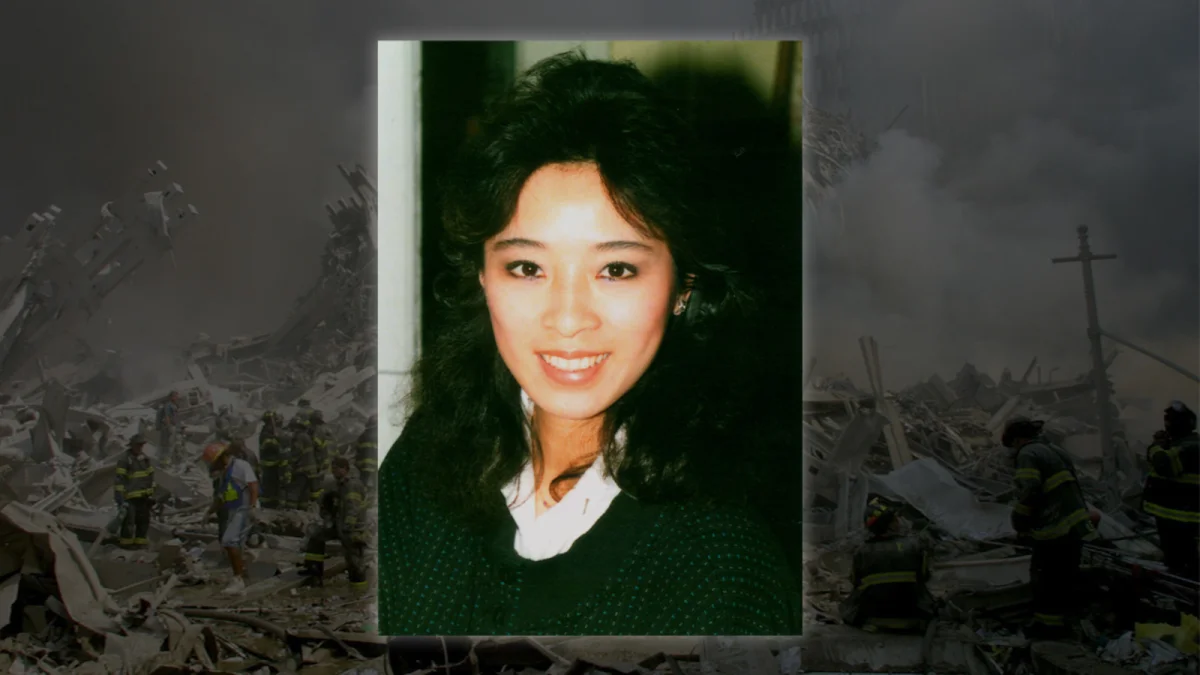
Flight 11 crashes into the North Tower of the World Trade Center (WTC 1), striking between the 93rd and 99th floors. It is initially reported by media as a possible accident involving a small aircraft.
American Airlines Flight 77, which had taken off from Washington Dulles Airport bound for Los Angeles, is hijacked by five men over Ohio.
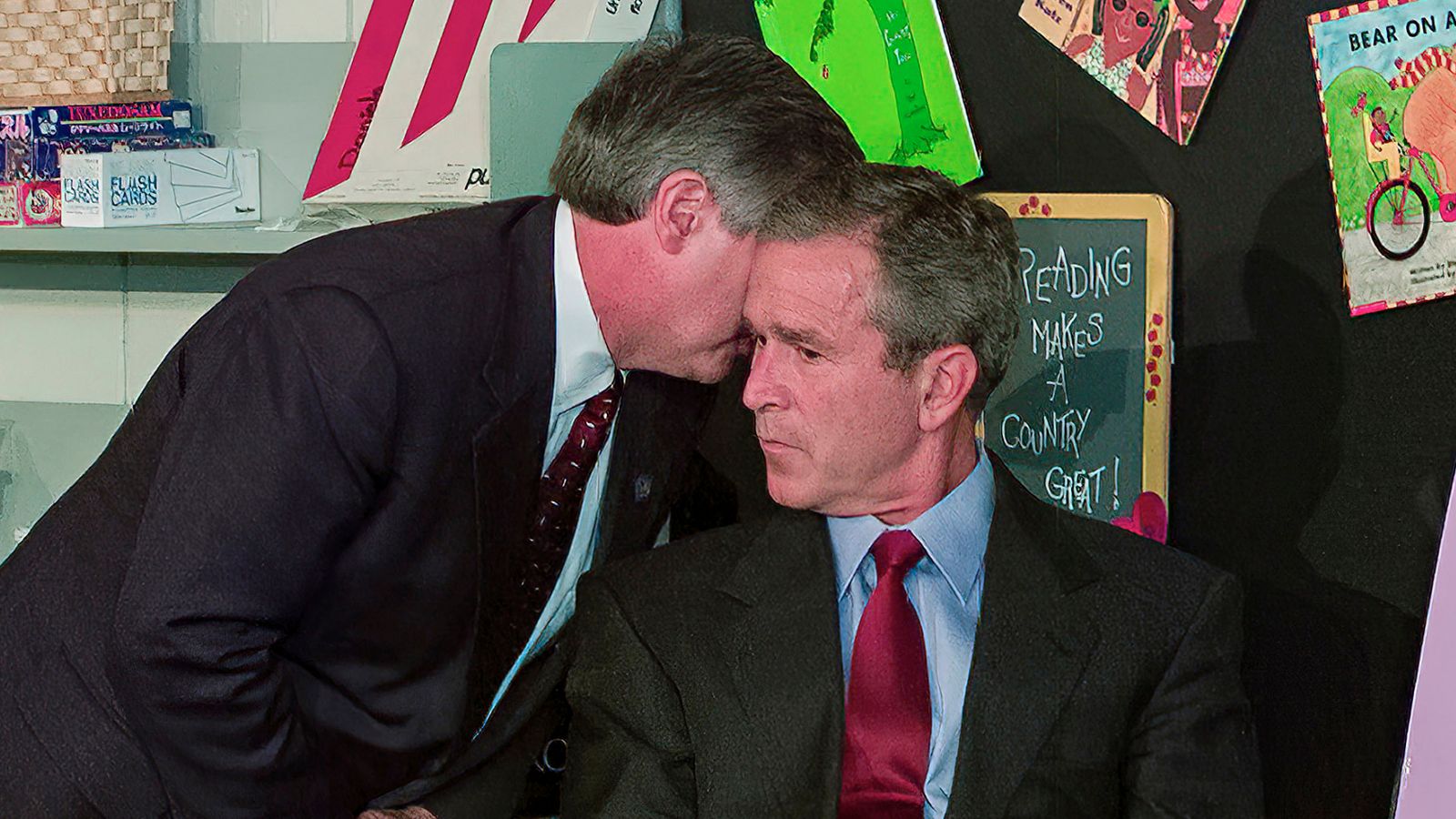
President George W. Bush, visiting Emma E. Booker Elementary School in Sarasota, Florida to promote an education initiative, is told before entering a classroom that a plane has hit the World Trade Center. He is informed it appears to be an accident and decides to continue with the school visit as planned.
Flight 175 crashes into the South Tower of the World Trade Center (WTC 2), hitting between the 77th and 85th floors — live on national television. It becomes immediately clear the country is under attack. Inside the classroom in Sarasota, Chief of Staff Andrew Card leans in and quietly tells President Bush that a second plane has hit the second tower and that America is under attack. Bush remains seated with the students for several more minutes before excusing himself.
United Airlines Flight 93, traveling from Newark to San Francisco with 44 people on board, is hijacked over Ohio by four men.
Speaking from the school in Sarasota, President Bush addresses the attacks publicly for the first time, calling them an apparent terrorist attack on the country and promising a full investigation. He is then rushed to Air Force One.
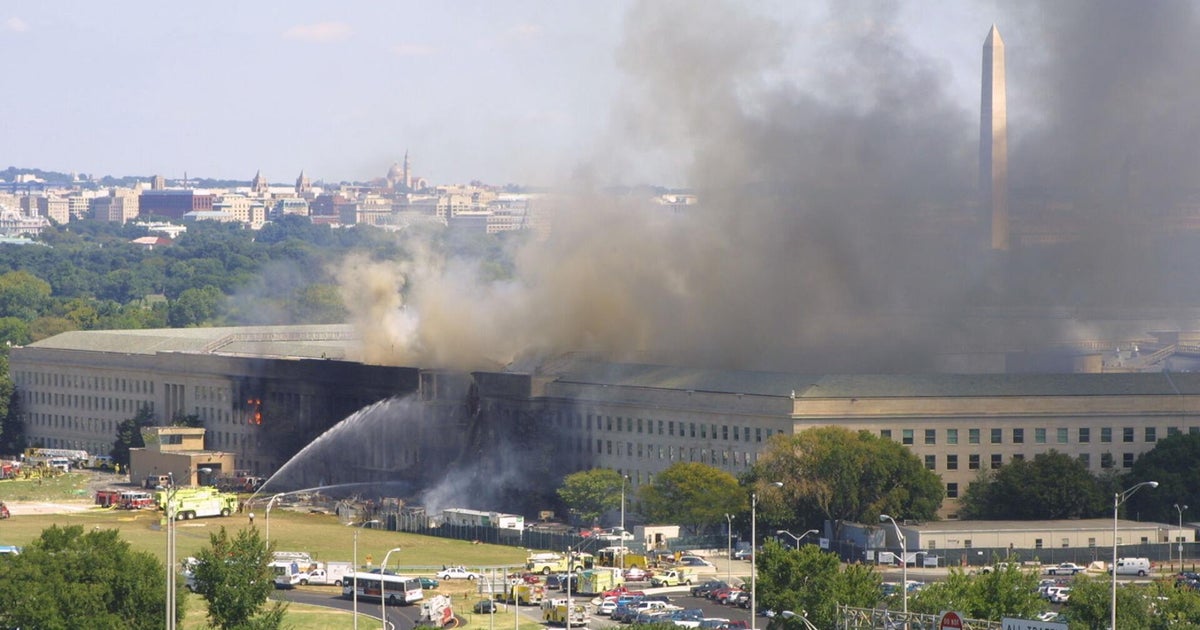
Flight 77 crashes into the Pentagon in Arlington, Virginia, tearing through the building's western side and killing 189 people, including everyone on board.
The Federal Aviation Administration grounds all flights across the United States for the first time in the country's history, and U.S. airspace is closed to incoming international traffic. Around the same time, the White House and the Capitol are evacuated.
Aboard Flight 93, passengers begin making phone calls to spouses, parents and emergency operators, learning through those calls about the attacks in New York and Washington and realizing their own flight is likely headed for a similar fate.
A group of Flight 93 passengers, having voted among themselves to act, storms the cockpit in an attempt to retake control of the plane from the hijackers.
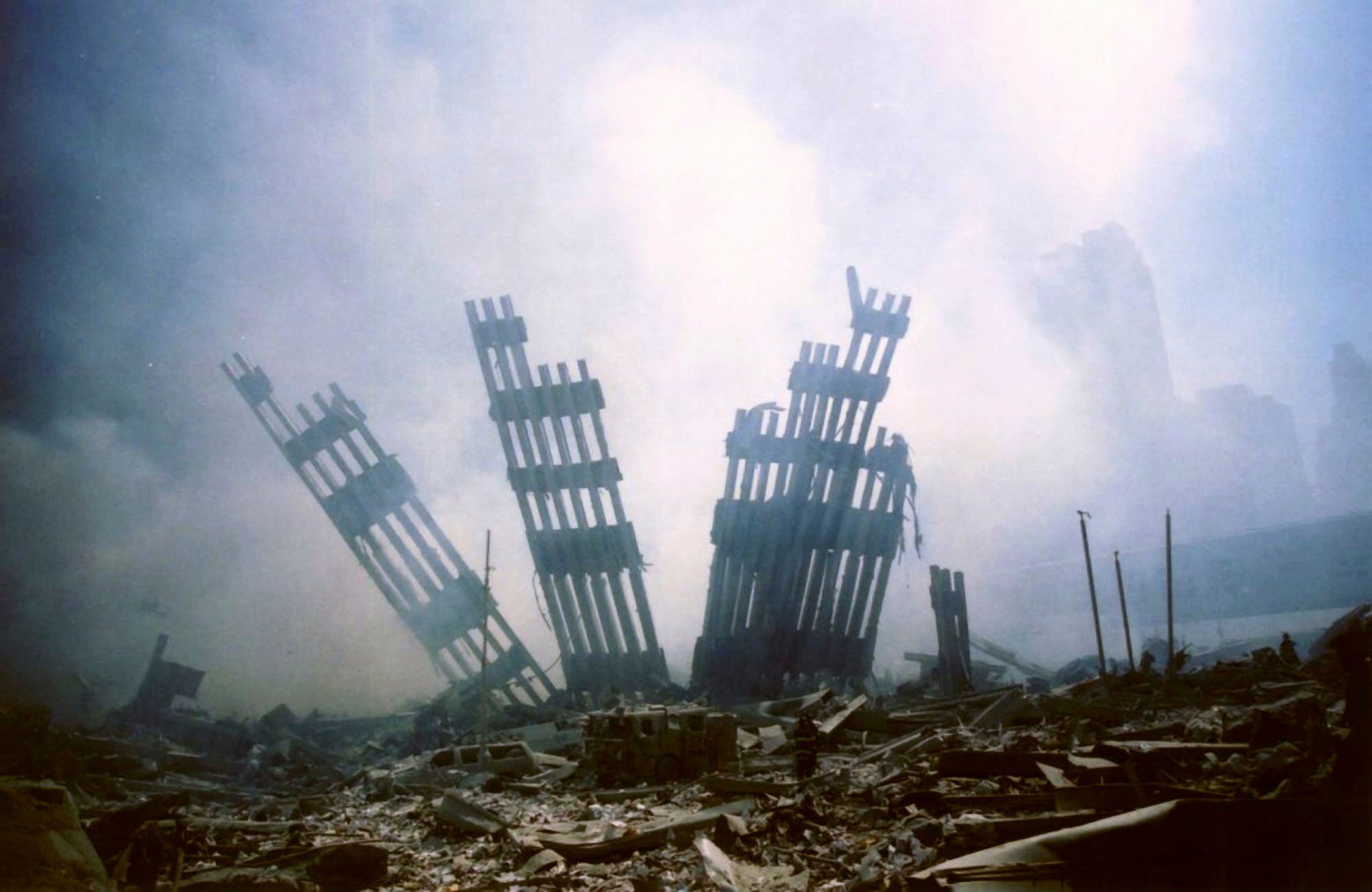
The South Tower of the World Trade Center collapses, 56 minutes after being struck.
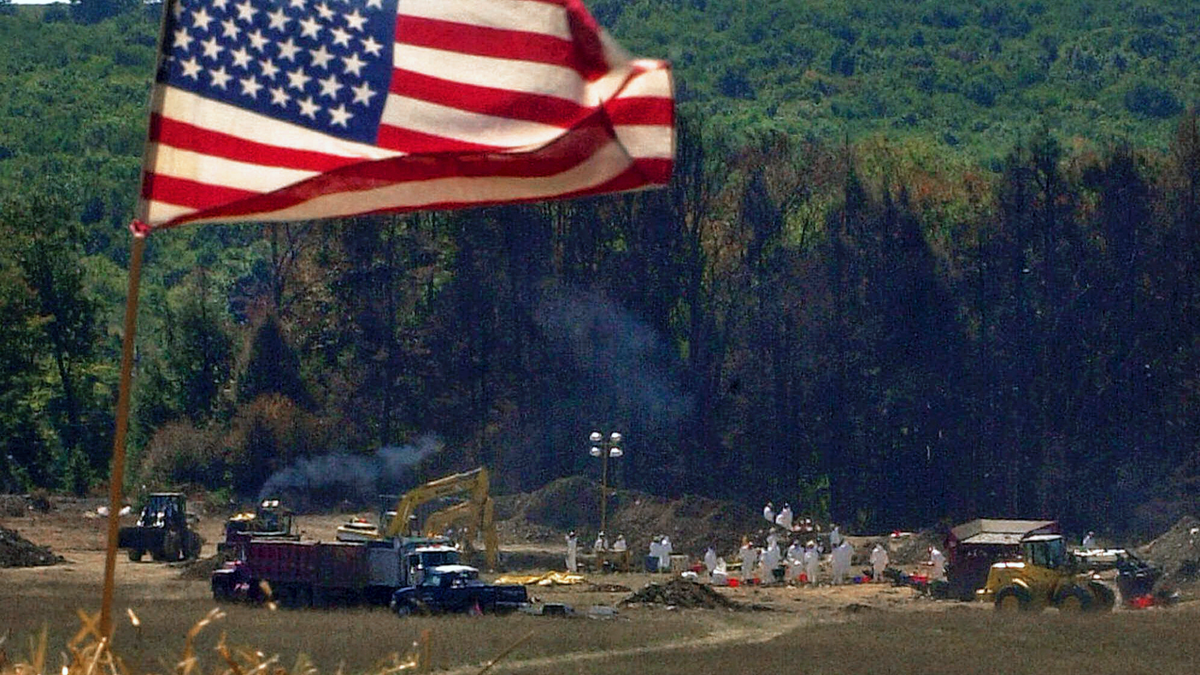
As passengers fight for control in the cabin, Flight 93 crashes into a field near Shanksville, Pennsylvania, killing all 44 people aboard. The hijackers' presumed target — believed to be the U.S. Capitol or the White House — is never reached.
The North Tower of the World Trade Center collapses, 102 minutes after impact.
The Calls From the Planes
Much of what investigators later pieced together about the hijackings came from phone calls made during the flights themselves. On Flight 11, flight attendant Betty Ong and later Madeline "Amy" Sweeney stayed on the line with ground staff for several minutes, describing the hijackers' seating and the stabbing of a passenger and crew member in real time.
On Flight 175, at least one flight attendant and a passenger reached family members and an airline reservations desk to report the hijacking before the plane struck the South Tower.
The calls from Flight 93 were the most consequential. Passengers like Todd Beamer, Jeremy Glick and Tom Burnett spoke to relatives and an airphone operator, learning about the World Trade Center and Pentagon attacks and concluding that their hijackers intended to use the plane as a weapon as well. Several passengers agreed to rush the cockpit; Beamer's phrase "let's roll," said to the passengers around him before the group moved, later became one of the most widely repeated phrases associated with that day.
President Bush's Day
President Bush learned of the first crash just before entering a second-grade classroom in Sarasota and was told of the second crash by Andrew Card while sitting with the students. For security reasons, he did not return directly to Washington. Air Force One instead flew first to Barksdale Air Force Base in Louisiana, where Bush recorded a brief statement to the nation around 12:36 PM, and then on to Offutt Air Force Base in Nebraska, home to U.S. Strategic Command, where he was able to convene a secure video conference with his national security team.
Bush returned to Washington that evening and addressed the country from the Oval Office at 8:30 PM, describing the attacks and pledging that the United States would find and punish those responsible. Two days later, on September 14, he visited Ground Zero in New York, where he spoke to rescue workers atop the rubble using a bullhorn — one of the defining images of the aftermath.
Who Carried Out the Attacks
The hijackings were carried out by 19 men affiliated with al-Qaeda, the militant network led by Osama bin Laden. The operation's on-the-ground leader was Mohamed Atta, an Egyptian national who piloted Flight 11 into the North Tower; several of the hijackers, including Atta, had trained at flight schools inside the United States in the months before the attacks. The plot's principal architect, according to the 9/11 Commission that later investigated the attacks, was Khalid Sheikh Mohammed, who first proposed the idea to bin Laden years earlier. Bin Laden was killed by U.S. forces in Pakistan in 2011; Khalid Sheikh Mohammed was captured in 2003 and has remained in U.S. custody at Guantanamo Bay since.
Hours and Days Later
By midday, the New York Stock Exchange, the Nasdaq and financial markets across the country had suspended trading; the NYSE would not reopen until September 17, its longest closure since 1933. Major landmarks, government buildings and theme parks across the U.S. shut down for the day, and international borders and airspace tightened almost immediately.
The next day, NATO invoked Article 5 of its founding treaty for the first time in the alliance's history, declaring the attacks on the United States an attack on all member states. In New York, rescue and recovery operations at what became known as Ground Zero continued for months, as firefighters, police officers and volunteers searched the wreckage for survivors and, later, remains.
By the end of that day, nearly 3,000 people had been killed across the four sites — the two towers, the Pentagon, and the field in Shanksville — making September 11 the deadliest terrorist attack in U.S. history and the single deadliest day for both the New York City Fire Department and the NYPD. In the weeks and years that followed, the attacks led to the creation of the U.S. Department of Homeland Security, sweeping changes to airport security worldwide, and the wars in Afghanistan and Iraq.