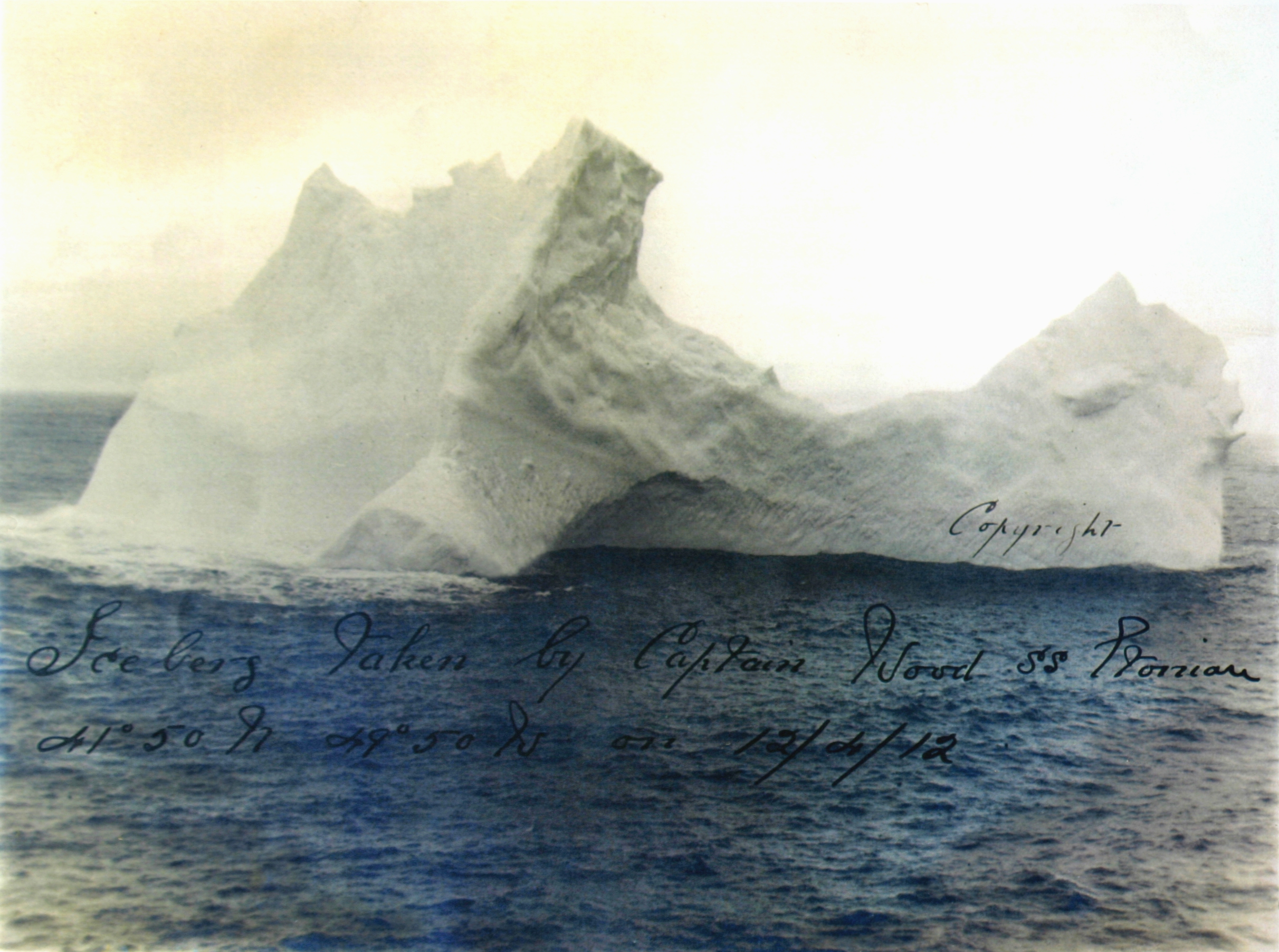
On April 14, 1912, at 9:00 AM, the Caronia reported icebergs at 42°N, 49°W. Over the course of the afternoon, the Baltic, the Amerika and the Noordam sent similar warnings about the same stretch of ocean. At 7:30 PM, the Titanic received three more messages from the Californian pointing out large icebergs nearby, and at 9:40 PM the Mesaba sent yet another warning — one that never made it to the bridge. At 10:00 PM, lookouts Frederick Fleet and Reginald Lee took over their watch, with the outside temperature sitting at freezing. At 10:55 PM, the Californian's wireless operator, Cyril Evans, sent one last ice warning to ships in the area; the Titanic's own operator, Jack Phillips, shot back telling him to stop interfering, since he was busy transmitting passenger messages to the relay station at Cape Race.
At 11:40 PM, at position 41°46′N, 50°14′W, and travelling at 22.5 knots, Fleet spotted an iceberg less than 500 meters ahead and alerted the bridge. First Officer William McMaster Murdoch ordered the ship to turn and the engines reversed, but about 37 seconds later the Titanic struck the iceberg along its starboard side. The impact lasted roughly eight seconds and popped rivets along some 100 meters of hull, tearing open a gash five meters below the waterline that flooded the first five watertight compartments. By 11:50 PM, water had already risen four meters inside the bow.
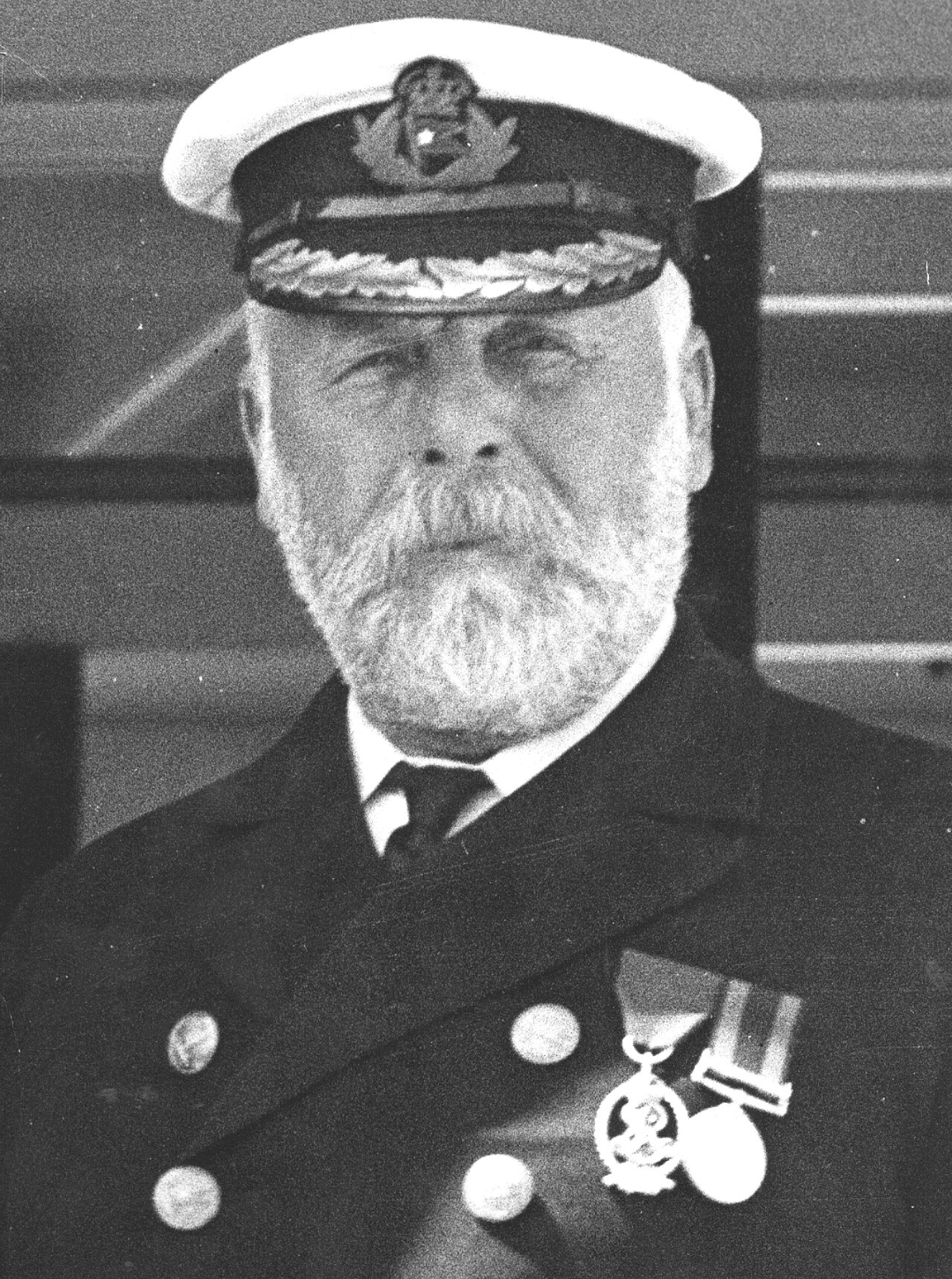
At 12:05 AM on April 15, Captain Edward Smith gathered the crew and gave the order to uncover the lifeboats. Around the same time, Thomas Andrews, the ship's designer, confirmed that sinking was unavoidable and estimated the Titanic had one to two hours left afloat. At 12:10 AM, Fourth Officer Joseph Boxhall calculated the ship's position. At 12:15 AM, the first distress call, CQD, went out over the wireless, later followed by SOS. At 12:25 AM, the order came to load women and children first, and the ship's band began playing on deck to keep spirits up.
The first lifeboat, No. 7, was lowered on the starboard side at 12:40 AM with only 28 of its 65 seats filled. Boat 5 followed at 12:43 AM carrying 35 people, and the first distress rocket was fired into the night sky at 12:45 AM. Boat 3 launched at 12:55 AM with 32 people aboard, and at 1:00 AM boat 8 — the first lowered on the port side — left with 28. Boat 1 went down at 1:05 AM with just 12 of its 40 possible occupants, and boat 6 followed at 1:10 AM carrying 24. From 1:15 AM on, water began visibly climbing over the bow and the evacuation picked up speed: between 1:20 and 1:50 AM, boats 16, 14, 12, 9, 11, 13, 15, 10 and 4 went into the water one after another, several of them nearly full — boats 13 and 15 were the only two launched at full capacity. Boat 2 left at 1:45 AM with 18 people aboard, and the last two conventional lifeboats, C and D, were lowered at 2:00 AM and 2:05 AM respectively.
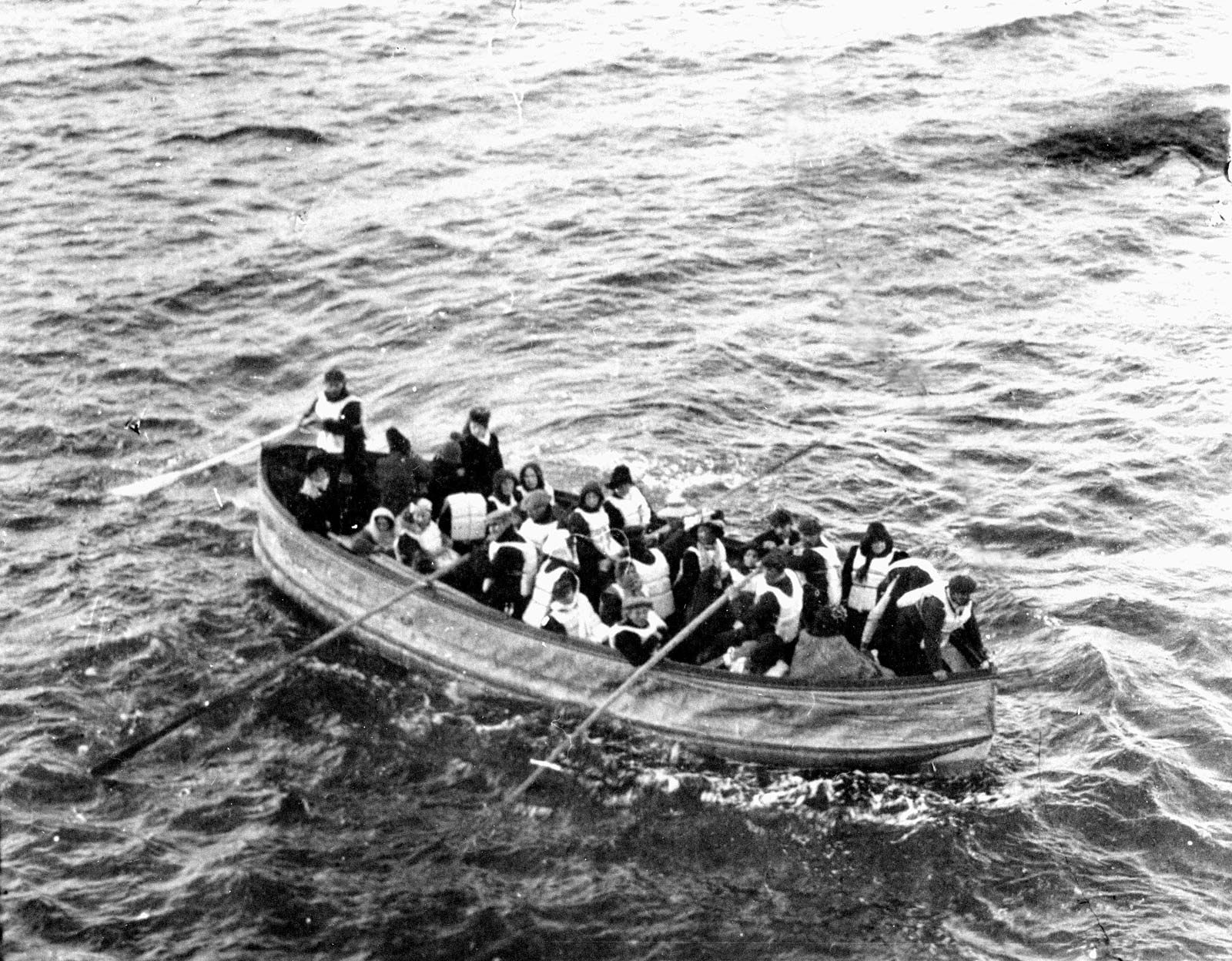
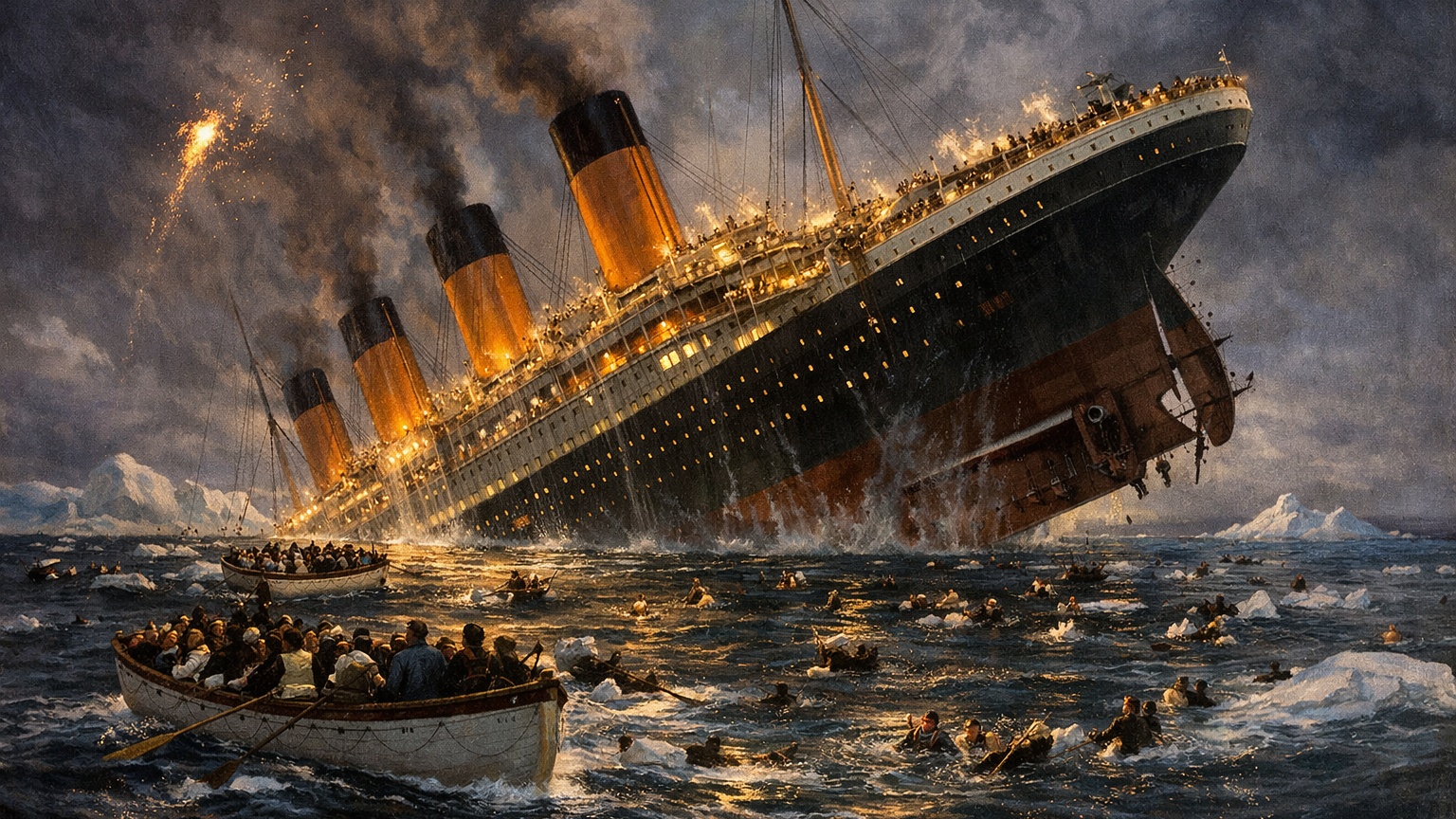
By 2:05 AM, only two collapsible lifeboats remained, stowed on top of the officers' quarters. Collapsible A was successfully secured to the davits, but collapsible B flipped upside down onto the deck as the crew struggled to launch it. At 2:10 AM, Captain Smith released wireless operators Phillips and Bride from duty, telling them it was now every man for himself. At 2:17 AM, the band stopped playing and the dome above the Grand Staircase collapsed as its glass shattered under the strain. At 2:18 AM, the ship's lights went out for good and the hull broke apart near the third funnel. The stern bobbed on the surface for a few more minutes before sinking completely at 2:20 AM — two hours and 40 minutes after the collision — into water between -1°C and -2°C.
At 3:00 AM, lifeboat 14 went back to the site of the sinking to search for survivors in the water, but managed to pull out only four men, one of whom later died from exposure. At 3:30 AM, the lights of the RMS Carpathia were spotted on the horizon, and the ship picked up the first lifeboat, No. 2, roughly 40 minutes later. The rescue continued until 8:30 AM, when the last lifeboat, No. 12, was finally brought aboard, with Second Officer Charles Lightoller the last person to climb onto the Carpathia. The ship set course for New York at 8:50 AM, carrying the survivors of one of history's most famous maritime disasters.