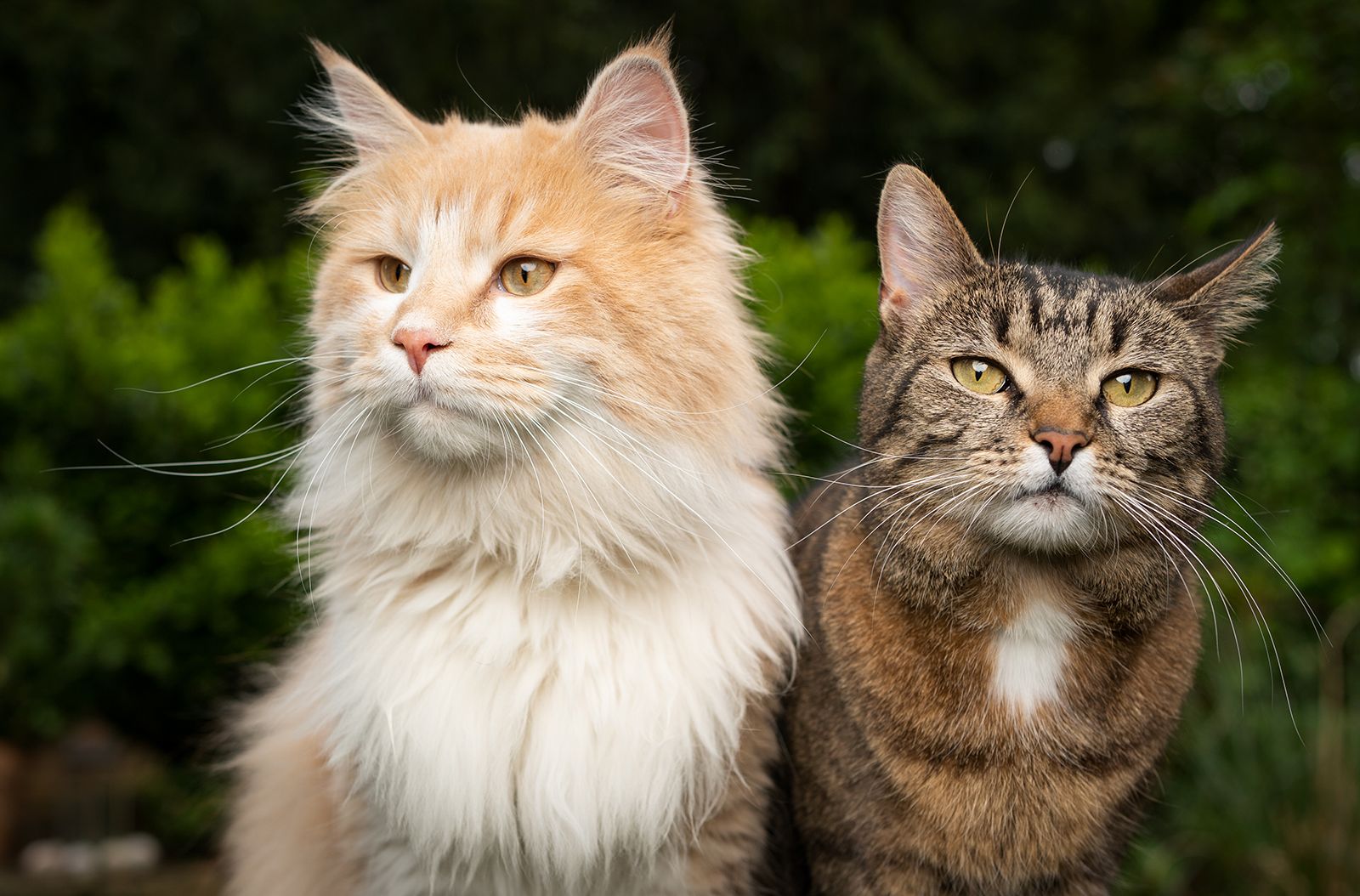
A cat curled up on your lap, vibrating softly, looks like the picture of contentment. But cats also purr at the vet, when they are in pain and when they want breakfast. Purring is less simple than it seems.
How a cat makes the sound
For decades, the standard explanation was that a repeating signal from the brain, sometimes called a neural oscillator, makes the muscles of the larynx (the voice box) twitch rapidly. Those twitches vibrate the vocal cords as the cat breathes in and out, producing a low rumble. A typical purr falls somewhere between about 25 and 150 vibrations per second, or hertz.
In 2023, a study in the journal Current Biology added a twist. A team led by voice scientist Christian Herbst at the University of Vienna removed the larynges from eight domestic cats that had died and found that all eight could produce purr-like sounds at about 25 to 30 Hz with no nerve signals and no muscle contractions at all. The researchers also found small masses of connective tissue, up to about 4 millimeters across, embedded in the cats’ vocal folds. These “pads” seem to make the folds denser, so they vibrate more slowly and can make very low sounds despite the cat’s small size.
The authors were careful to say their results do not fully rule out the muscle-twitch explanation. Purring may well be a mix of both mechanisms, and confirming how it works in living cats is difficult.
Why do cats purr?
There is no single reason. Cats purr in many situations:
- Contentment. The classic case: relaxed, warm and comfortable.
- Stress or discomfort. Cats are known to purr at the vet or during stressful events, which suggests purring can also be a way to self-soothe.
- Bonding. Mother cats purr near their kittens, which are born blind and deaf, and kittens purr back.
- Asking for something. This one is the best studied, as we’ll see next.
The “solicitation purr”
In 2009, researchers at the University of Sussex reported that many cats have a special purr they use to get food or attention from their owners. It mixes the usual low purr with a higher-pitched, cry-like sound that resembles a baby’s cry, something humans are naturally tuned to notice. Owners in the study found these purrs more urgent and less pleasant, and cats seem to learn that this version works.
Does purring heal cats?
You will often read that the frequency of a purr promotes healing of bones and tissue. It is an appealing idea, and it would explain why injured cats purr. The honest answer is that it remains a hypothesis. The frequencies overlap with ranges used in some research on tissue and bone, but no study has shown that a cat’s own purring heals it. Treat it as an interesting theory, not a medical fact.
Which cats purr?
Small cats such as the domestic cat, along with cheetahs and pumas, can purr. The big roaring cats, lions and tigers among them, have different vocal anatomy and generally cannot purr the same way.
What to pay attention to
A purr does not always mean happy. Look at the whole cat: body language, posture and context. If your cat purrs constantly while hiding, eating less or acting differently, it is worth a vet visit, since cats are good at masking illness.