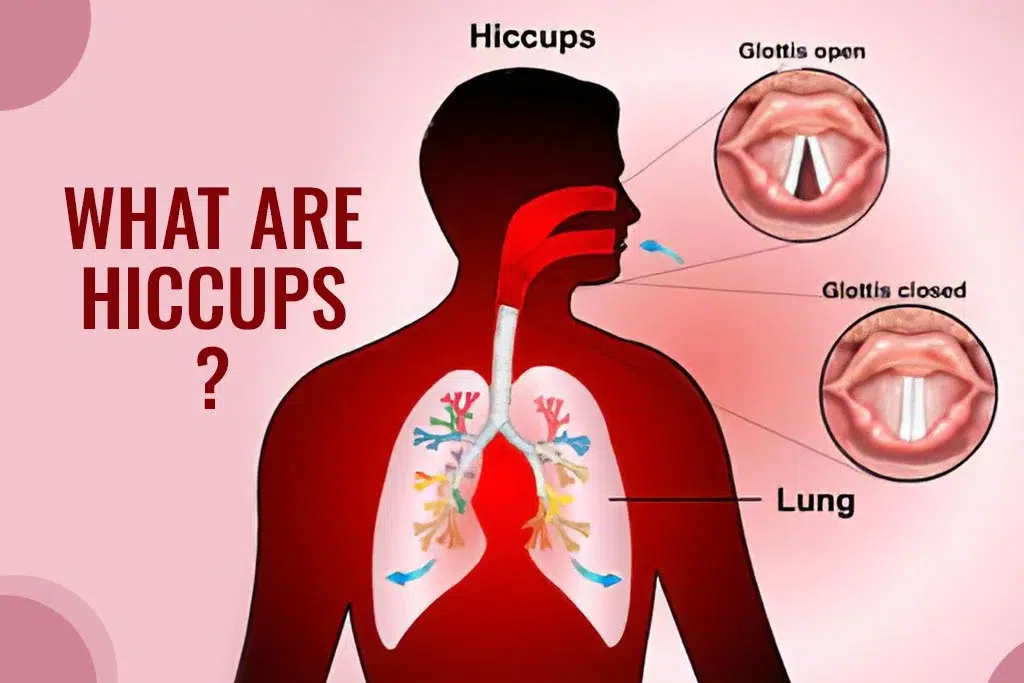
A hiccup is actually a two-step reflex happening in a fraction of a second. First, the diaphragm — the sheet of muscle just below your lungs that normally contracts smoothly every time you breathe in — suddenly spasms and contracts too hard, too fast. About 35 milliseconds later, the glottis, the opening between your vocal cords, snaps shut to stop the extra rush of air. That abrupt closure is what produces the characteristic "hic" sound. The whole sequence is controlled by a reflex arc running between the brainstem and the phrenic and vagus nerves, which together control the diaphragm and much of the rest of the breathing apparatus.
A Reflex That May Predate Lungs as We Know Them
Unlike goosebumps, which have an obvious evolutionary explanation, hiccups have puzzled scientists for a long time, since the reflex doesn't seem to serve any clear purpose in humans. One of the more widely discussed theories, developed by French researchers in the 2000s, argues that hiccups are a vestige of the transition our amphibian ancestors made from breathing through gills to breathing through lungs. The idea is that hiccupping engages a nerve circuit similar to the one tadpoles use to push water over their gills while keeping it out of their developing lungs — and that the human body has simply held on to that ancient wiring, even though it no longer serves any real function.
It's a theory, not settled fact, but it's supported by one striking observation: human fetuses hiccup frequently in the womb, sometimes for extended stretches, well before their lungs are ever used to breathe air. Some researchers believe fetal hiccupping may help train the diaphragm and the surrounding nerve pathways in preparation for breathing after birth.
What Sets Them Off
In everyday life, hiccups are usually triggered by something that irritates or overstimulates the diaphragm or the nerves connected to it. In short, frequent episodes, there often isn't one single identifiable cause — but the most common triggers include:
- Smoking
- Eating too much and overfilling the stomach
- Eating too fast
- Swallowing a lot of air
- Drinking soda or other carbonated beverages
- Drinking alcohol
- Very spicy or heavily seasoned food
- Sudden temperature changes, including very hot or very cold food and drinks
- Emotional stress
- Anxiety or excitement
Stomach distension is probably one of the most common underlying mechanisms — which helps explain why overeating, eating quickly, swallowing air, and drinking carbonated beverages are such frequent triggers: all of them stretch the stomach and, with it, the diaphragm sitting right above it.
For most people, a bout of hiccups resolves on its own within a few minutes, which is why the dozens of folk remedies passed down for stopping them — holding your breath, taking small sips of cold water, gargling, or being startled by someone else — mostly work by doing one of two things: raising the carbon dioxide level in the blood or stimulating the vagus nerve, both of which can interrupt the reflex loop. None of them works for everyone, though, and there's no single method proven to stop hiccups reliably in all cases.
When Hiccups Are More Than Just Hiccups
Hiccups that last more than 48 hours are considered persistent, and cases lasting over a month are classified as intractable. Persistent or intractable hiccups are worth having checked out, since — unlike the brief, everyday kind — they can sometimes be linked to nerve irritation or damage, metabolic imbalances, or certain medications.
It's worth seeking medical attention before the 48-hour mark if hiccups show up alongside shortness of breath, chest pain, or neurological symptoms such as weakness, slurred speech, confusion, or loss of balance — those combinations point to something beyond a routine case of hiccups. On the other end of the spectrum, hiccups are extremely common in newborns and infants, and in the vast majority of cases don't signal any underlying health problem at all.
Key Takeaways
- Hiccups come from an involuntary contraction of the diaphragm and other breathing muscles, followed by a rapid closure of the glottis, which produces the characteristic sound.
- Most episodes last only a few minutes and go away on their own.
- Eating too much or too fast, swallowing air, drinking soda or alcohol, and anxiety or excitement are among the most common triggers.
- Holding your breath for a few seconds, taking small sips of cold water, and other simple tricks can interrupt an episode, though none of them works for everyone.
- Hiccups lasting more than 48 hours are considered persistent; past one month, they're called intractable.
- Persistent hiccups are worth investigating, since they can be linked to underlying illness, metabolic issues, or medication.
- Seek medical attention before 48 hours if hiccups come with shortness of breath, chest pain, or neurological symptoms like weakness, slurred speech, confusion, or loss of balance.
- Hiccups are very common in newborns and infants and, in most cases, don't indicate any illness.