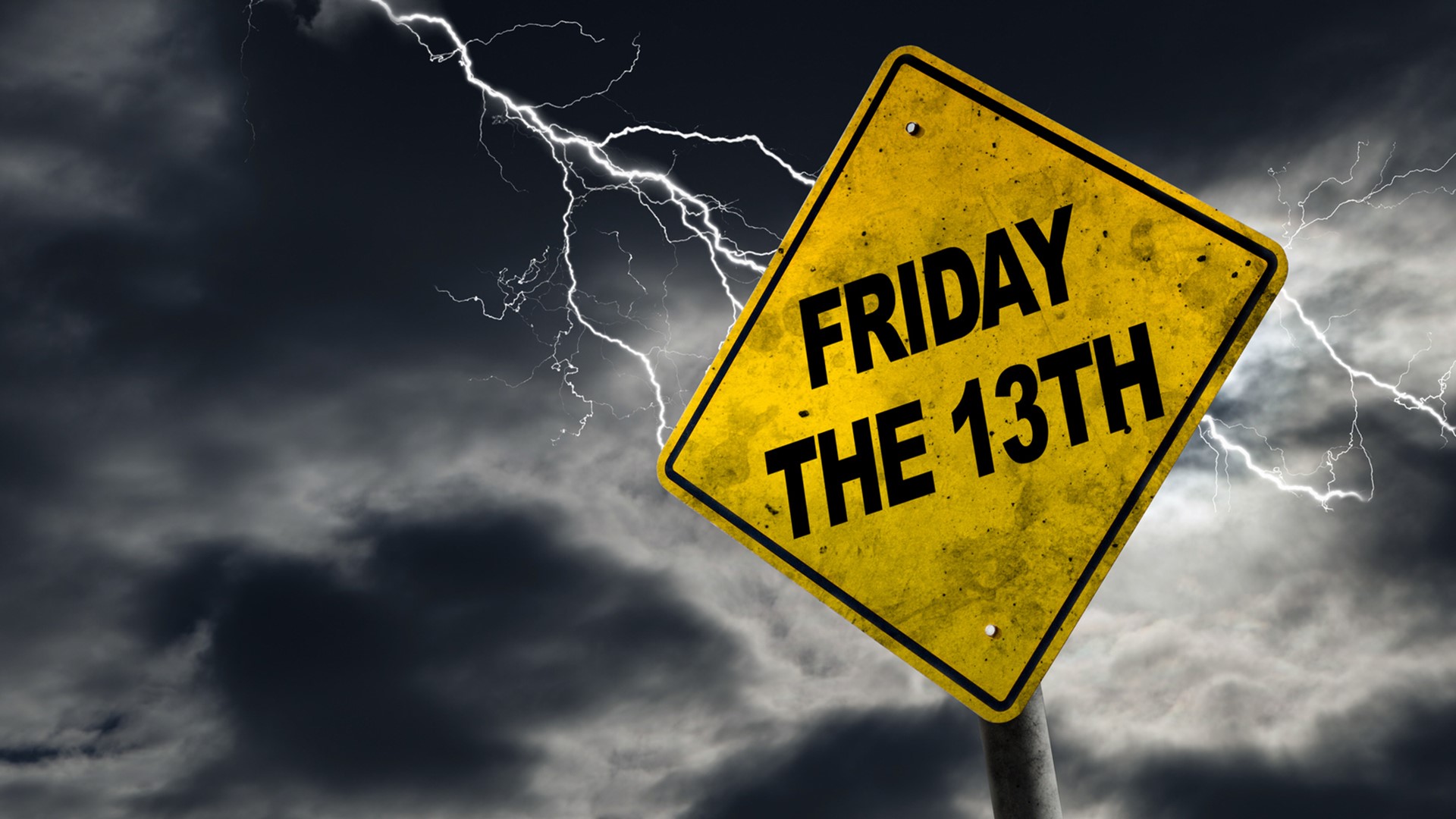
Skip the thirteenth floor, avoid the thirteenth row on the plane, stay home on Friday the 13th. Few superstitions are as widespread, and few have such a tangled history. The surprising part is that the experts cannot point to one clear origin.
Two superstitions in one
The date combines two separate beliefs. The fear of the number 13 has a name, triskaidekaphobia. The fear of Friday the 13th has an even longer one, paraskevidekatriaphobia, built from the Greek words for Friday and thirteen. Both ideas existed long before anyone put them together.
The number 13 has been considered unlucky for a very long time and in many cultures. The ancient Romans, for example, treated it as a bad omen. Part of the reason may be simple: 12 is a number of completeness (twelve months, twelve zodiac signs, twelve apostles), so 13 feels like it spoils the set.
The Last Supper and Good Friday
The most common explanation comes from Christian tradition. Thirteen people sat at the Last Supper, Jesus and his twelve apostles, and Judas Iscariot, who betrayed him, is often described as the unlucky thirteenth guest. The next day, Friday, is traditionally the day of the crucifixion. Put those together and you have a table of thirteen and a dark Friday.
A Norse myth about a thirteenth guest
A similar story appears in Norse mythology. According to the tale, twelve gods were feasting when the trickster Loki arrived uninvited as a thirteenth guest, and the evening ended in tragedy. The word “Friday” itself comes from the goddess Frigga (or Freya, depending on the source), which is why some people call the fear “friggatriskaidekaphobia.”
The Knights Templar: a popular story, but unproven
Another favorite explanation points to Friday, October 13, 1307. On that date, King Philip IV of France ordered the arrest of hundreds of members of the Knights Templar, a powerful medieval military order. Many were tortured, and some were later executed. It makes a dramatic origin story, but there is no solid evidence that this event is where the superstition began. Historians treat it as a popular theory rather than a proven fact.
A surprisingly modern superstition
Here is the twist. The first written record that links Friday and the number 13 as an unlucky pair dates only from the 19th century. It appears in a biography of the Italian composer Gioachino Rossini, who died on Friday, November 13, 1868. The author noted that, like many Italians, Rossini was said to regard Fridays as unlucky and thirteen as an unlucky number, and remarked on the coincidence of his death date.
Some writers also credit a 1907 novel, Friday, the Thirteenth by Thomas W. Lawson, with spreading the idea in popular culture. Later, the 1980 horror film Friday the 13th and its many sequels cemented the date as a symbol of fear.
Not everyone is afraid of the same day
The superstition is not universal. In Greece and in many Spanish-speaking countries, the unlucky date is Tuesday the 13th. In Italy, the feared combination is Friday the 17th. That alone suggests the belief is cultural rather than something tied to a single historical event.
Is it a real phobia?
Some people are genuinely anxious about the date, but most are not. Many experts consider triskaidekaphobia closer to a superstition, a kind of magical thinking, than a clinical phobia, since it usually appears only in particular situations and rarely disrupts daily life. Still, the habit shows up in everyday design: plenty of airlines and hotels skip a thirteenth row or floor.
So is Friday the 13th really unlucky? Nothing in the evidence says so. What it does have is centuries of stories, a handful of coincidences and a very good brand.