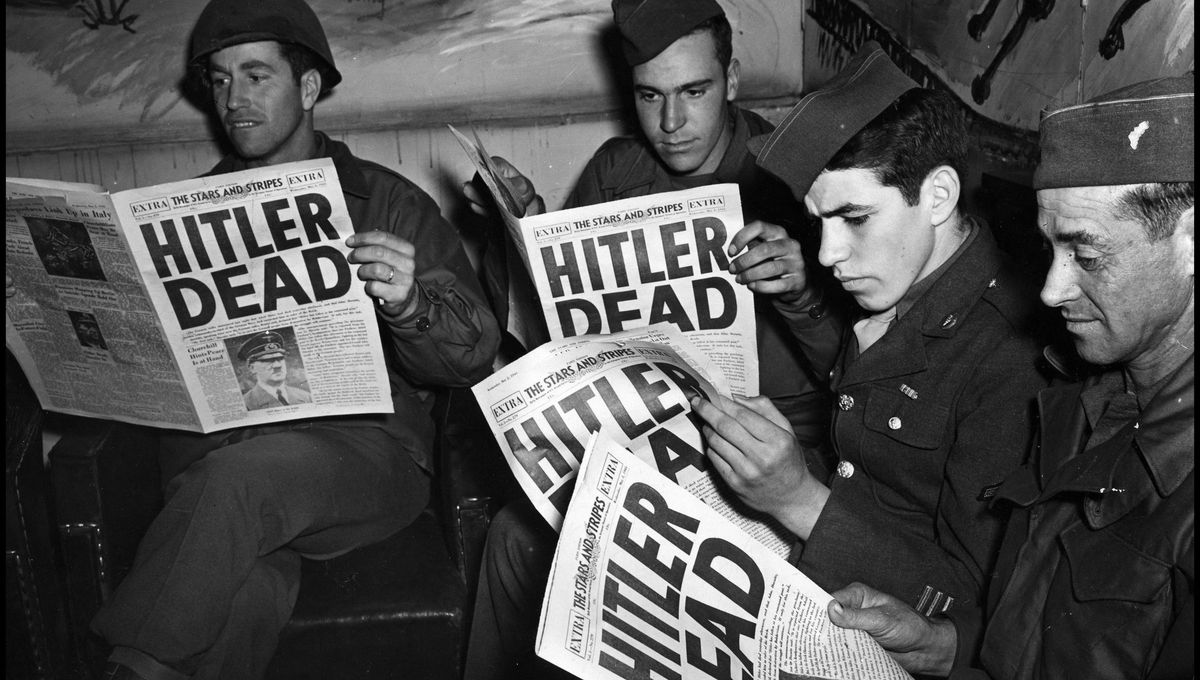
World War II didn't end all at once. Fighting in Europe stopped on May 8, 1945, when Germany surrendered unconditionally, but the war continued in the Pacific for nearly four more months. It finally came to a close on September 2, 1945, when Japanese officials signed the Instrument of Surrender aboard the USS Missouri, anchored in Tokyo Bay — the moment historians mark as the formal end of the Second World War.
By the time that ceremony took place, Japan's surrender was already several weeks old in practice. The United States had dropped atomic bombs on Hiroshima on August 6 and Nagasaki on August 9, and the Soviet Union had declared war on Japan and invaded Japanese-held Manchuria on August 8. Emperor Hirohito announced Japan's acceptance of the Allied surrender terms in a radio broadcast on August 15 — a date still marked in many countries as V-J Day. What happened on September 2 made that surrender official and legally binding.
How the Day Unfolded
Delegations begin arriving aboard the USS Missouri, anchored in Tokyo Bay alongside a vast assembly of Allied warships. Sailors and officers crowd the deck to witness the ceremony.
The Japanese delegation, led by Foreign Minister Mamoru Shigemitsu and General Yoshijiro Umezu, boards the Missouri.
General Douglas MacArthur, Supreme Commander for the Allied Powers, opens the ceremony with a short address, followed by remarks from U.S. Admiral Chester Nimitz.
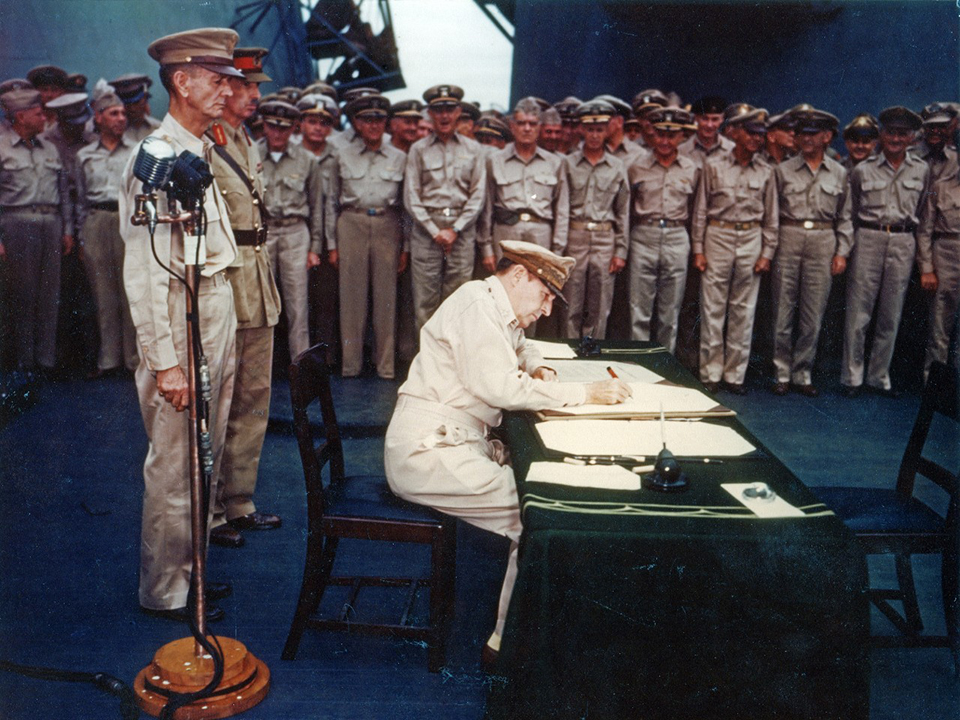
Shigemitsu signs the Instrument of Surrender on behalf of the Japanese government, followed by Umezu on behalf of Japan's Imperial General Headquarters.
MacArthur signs on behalf of the Allied Powers, followed by representatives of the United States, China, the United Kingdom, the Soviet Union, Australia, Canada, France, the Netherlands and New Zealand.
The signing concludes. MacArthur closes the ceremony by declaring that hostilities have ended, just as hundreds of Allied aircraft fly overhead in a formation salute over Tokyo Bay.
What Came Next
News of the surrender ceremony triggered celebrations across Allied nations already primed for it since the August 15 announcement — but for millions of Japanese civilians and soldiers, September 2 marked the start of a very different, uncertain chapter: occupation. MacArthur stayed on as head of the Allied occupation of Japan, a period that would reshape the country's constitution, economy and political system over the following seven years.
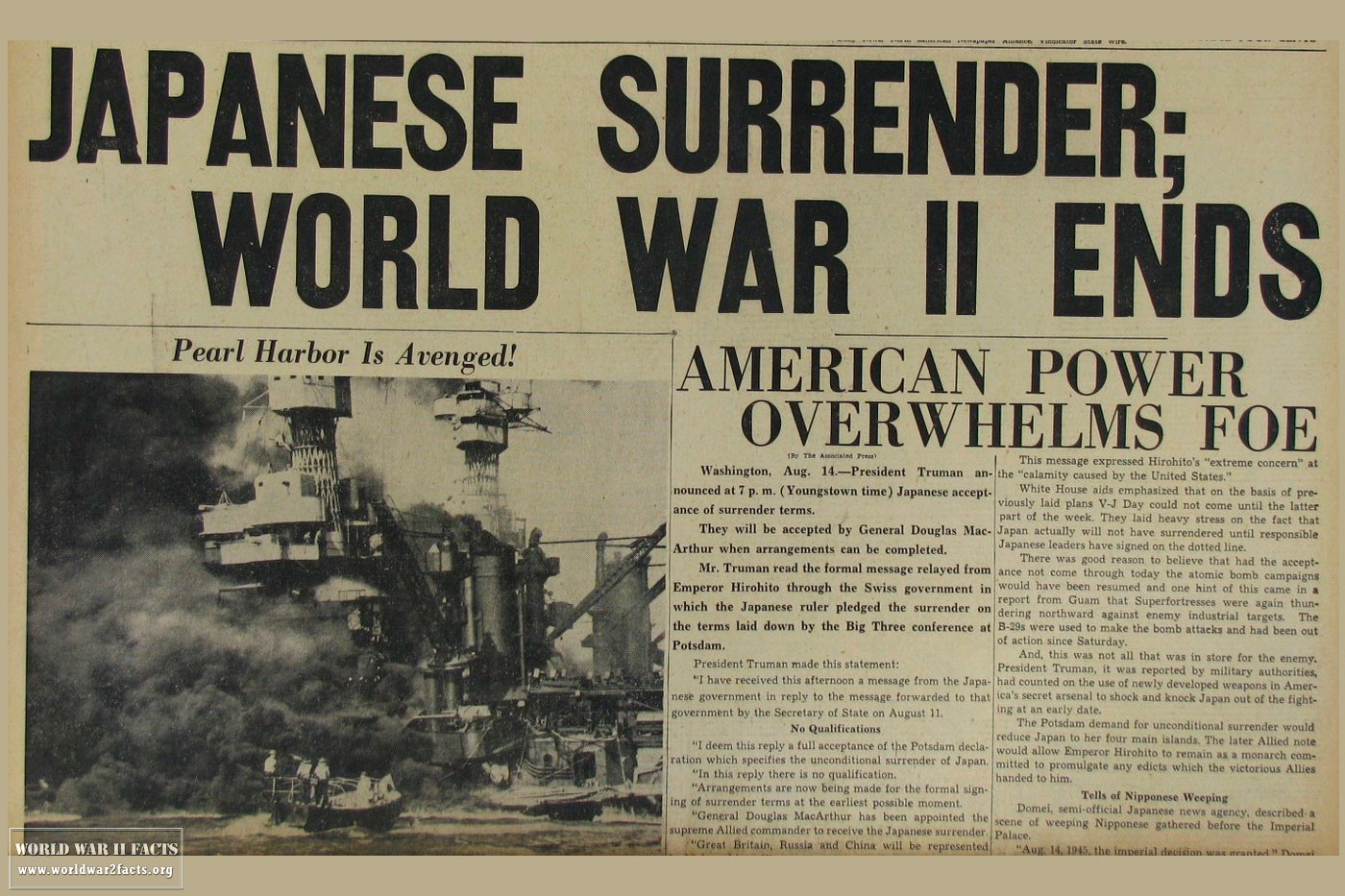
Around the world, the surrender set off a wave of demobilization, as tens of millions of troops began returning home from fronts that had stretched from Western Europe to the Pacific islands. The war had killed an estimated 70 to 85 million people worldwide, the deadliest conflict in human history, and left much of Europe and East Asia in ruins. Its end also set the stage for the postwar order that followed: the founding of the United Nations weeks earlier in June 1945, the beginning of the nuclear age, and the start of the decades-long rivalry between the United States and the Soviet Union that would define the Cold War.