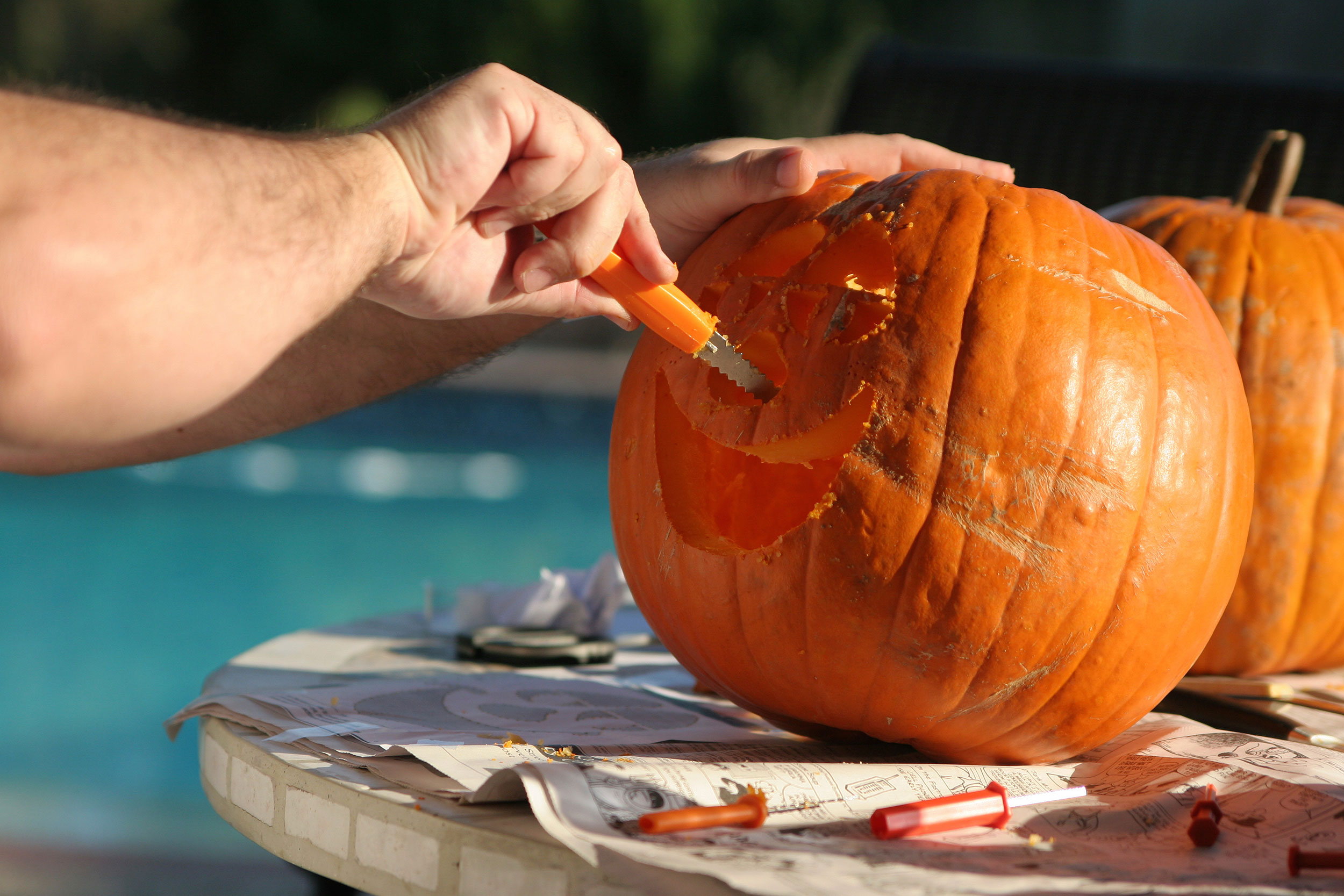
Every October, millions of people scoop out a pumpkin, cut a grinning face into it and set a candle inside. It is one of the most recognizable Halloween rituals in the world. But the first jack-o’-lanterns were not pumpkins at all.
It started with turnips
The custom of carving faces into vegetables has roots in Ireland and Scotland, where large turnips, potatoes and beets were hollowed out and given grotesque faces. In England, big beets were used. A light was placed inside, and the carved vegetable was set near a door or in a window.
Anyone who has tried to carve a turnip will understand why the tradition moved on. They are small, dense and hard on the hands.
The legend of Stingy Jack
The name “jack-o’-lantern” comes from an Irish folktale about a man known as Stingy Jack. In the usual telling, Jack was a drunk and a trickster who invited the Devil for a drink, then talked him into turning into a coin so Jack would not have to pay. Jack pocketed the coin next to a silver cross, which kept the Devil trapped, and only freed him after the Devil promised to leave him alone for a year and not to claim his soul if he died.
The story continues with a second trick: Jack persuaded the Devil to climb a tree, then carved a cross into the trunk so he could not come down, and bargained for even more time. When Jack finally died, heaven would not take him, and the Devil, bound by his promise, would not either. Instead the Devil tossed him a glowing coal, which Jack placed inside a hollowed-out turnip to light his way. He was said to wander the earth forever as “Jack of the Lantern,” which was shortened over time to jack-o’-lantern.
Why carve a scary face?
According to the tradition, people carved frightening faces into their own lanterns and put them by the door to scare off Stingy Jack and any other wandering evil spirits. The custom is often linked to the autumn period around Samhain, the old Celtic festival that marked the end of the harvest season and, in popular belief, a time when the boundary between the living and the dead grew thin. Halloween absorbed many of those ideas.
How the pumpkin took over
Pumpkins are native to North America, and that is where the tradition changed. In the 1800s, waves of Irish immigrants arrived in the United States and brought their lantern-carving custom with them. They quickly discovered that pumpkins were bigger, softer and far easier to hollow out than turnips. The switch was practical rather than symbolic, and it stuck. Over time, carving pumpkins stopped being a general autumn pastime and became closely tied to Halloween.
How much of the story is true?
It is worth keeping some perspective. The Stingy Jack tale is a folktale, and it only appears in print in the 19th century, so nobody can say for certain that it is the reason people began carving lanterns. Historians describe the vegetable-carving custom as one that “may” have started in Ireland and Scotland, and the exact path from old harvest traditions to today’s pumpkin patches is not fully documented.
What is clear is how the practice traveled: from turnips to pumpkins, from Ireland and Scotland to North America, and from there to the rest of the world. Today the candle has often been replaced by an LED light, but the idea is the same: a glowing face by the door on the night when spirits are said to roam.